


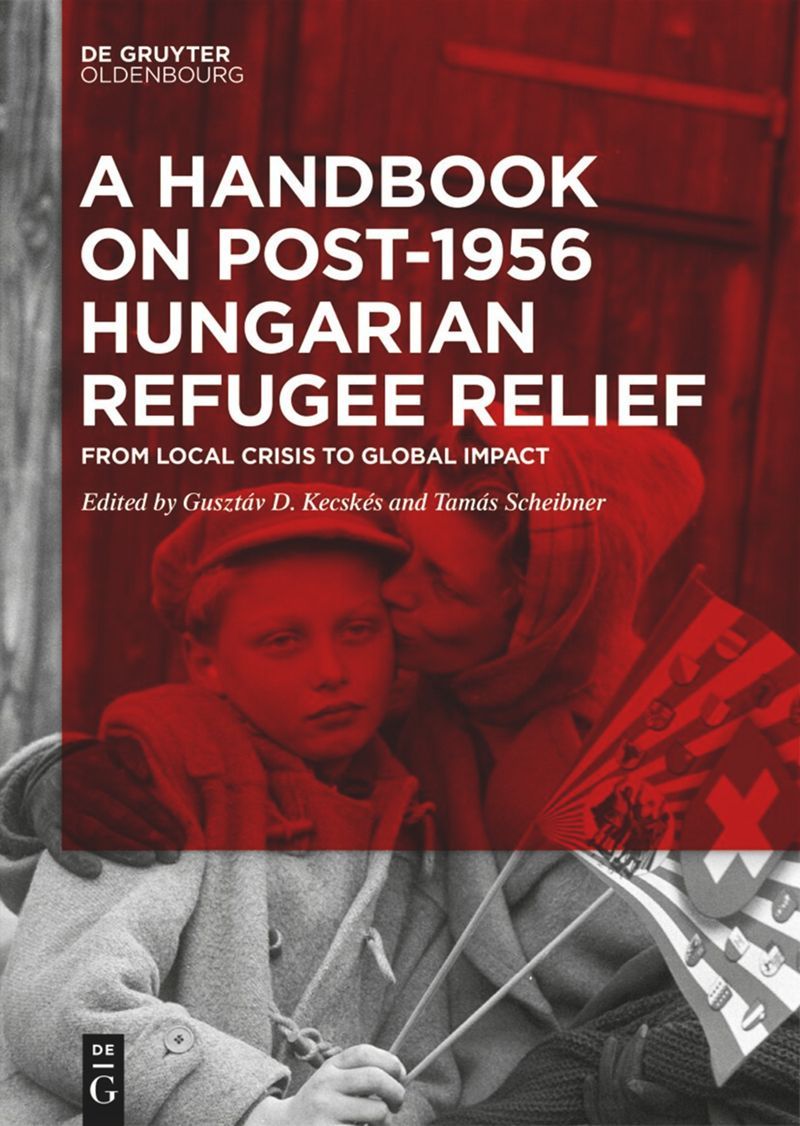
A Handbook on Post-1956 Hungarian Refugee Relief: From Local Crisis to Global Impact (De Gruyter Oldenbourg, 2026) has recently been published. The volume is edited by Gusztáv D. Kecskés and Tamás Scheibner, both affiliated with the Institute of History.
In addition to shaping the overall conceptual framework of the book, they also play a major role as authors, contributing several chapters.
The Handbook provides a comprehensive, internationally oriented analysis of the global responses to the Hungarian refugee crisis following the 1956 revolution. After the Soviet intervention, approximately 200,000 people fled the country, a movement that proved to be decisive not only in humanitarian terms, but also for the political and institutional development of modern refugee governance. Drawing on newly accessible archival sources, the volume examines how states, international organizations, and civil networks responded to this emergency, and how these responses were embedded in the broader context of the Cold War.
One of the volume’s key contributions lies in its consistent integration of local case studies into a transnational analytical framework. It argues that the Hungarian refugee movement of 1956 constituted a formative episode in the emergence of modern international refugee relief practices. The Handbook will therefore be of interest not only to scholars of Hungarian history, but also to researchers working in modern history, migration studies, Cold War studies, and the history of humanitarianism.
More information about the volume is available here: https://doi.org/10.1515/9783111316178


