


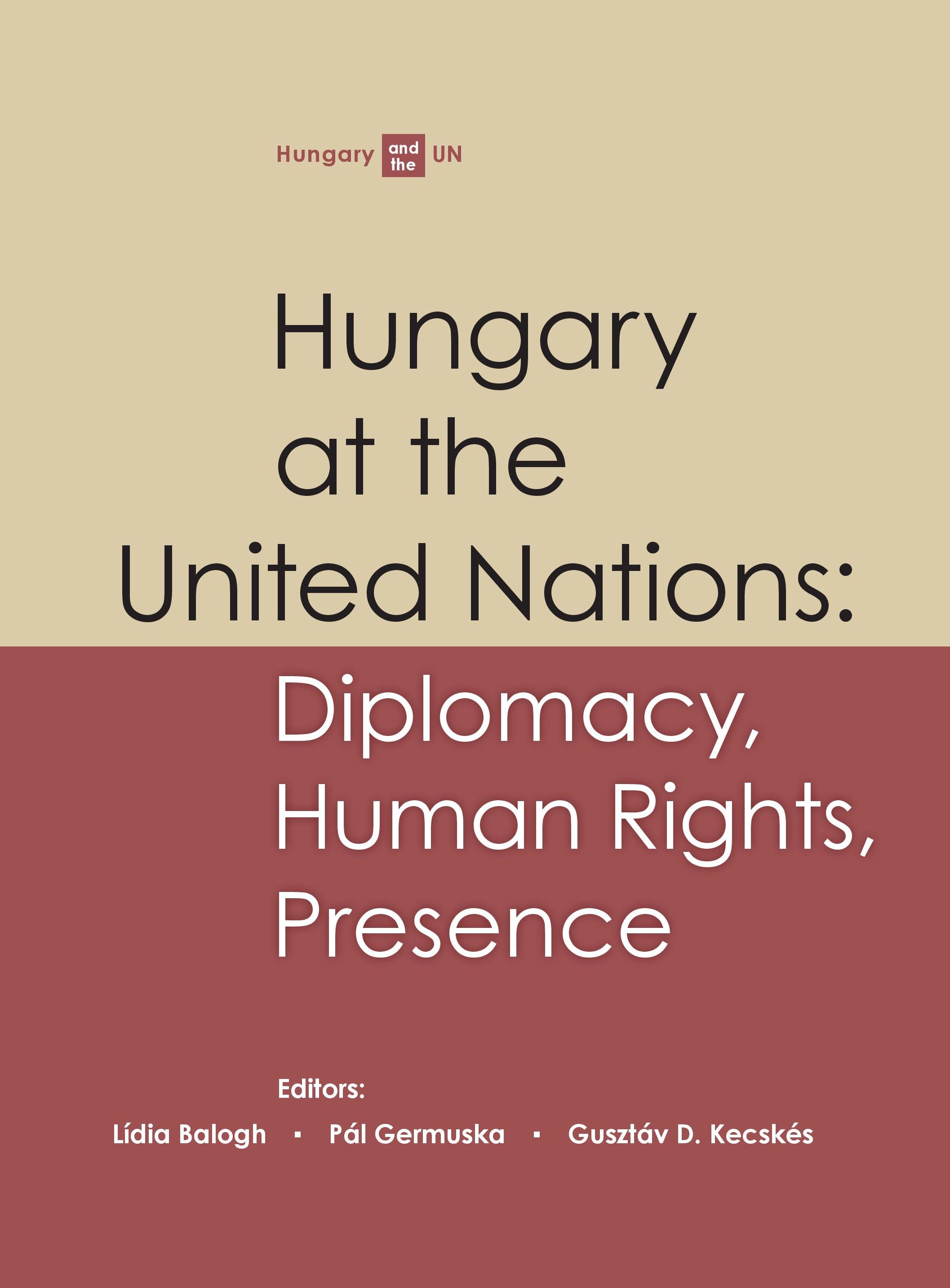
The Hungary and the United Nations Research Group has published its first English-language volume of studies, entitled Hungary at the UN: Diplomacy, Human Rights, Presence, jointly issued by the Institute of History of the ELTE Research Centre for the Humanities and the ELTE Centre for Social Sciences.
The volume was edited by Lídia Balogh, Pál Germuska and Gusztáv D. Kecskés,research professor at the Institute of History of the ELTE Research Centre for the Humanities and head of the research group, with the assistance of András Kiss.
The contributions explore various chapters in the history of relations between Hungary and the United Nations. Drawing on extensive research in Hungarian and foreign archives, they combine perspectives from history, international relations, law and military science.
The first thematic section examines the intersection of human rights and diplomacy. It covers Hungary’s implementation of the UN Convention for the Suppression of the Traffic in Persons, human rights dilemmas of the early Kádár era during the first decade of Hungary’s UN membership, and the diplomatic career of Imre Hollai.
The second section analyses Hungary’s relations with UN specialised agencies, including UNICEF, WHO, UNESCO and UNIDO. During the Cold War, these organisations served as important channels of technical cooperation and knowledge transfer.
The third section explores the international context of the “Hungarian Question” at the UN between 1956 and 1962. It examines the presence of the Hungarian state security services in New York, Otto von Habsburg’s efforts to keep the Hungarian cause on the UN agenda, and the counter-strategy pursued by Soviet foreign policy.
The fourth section focuses on the period following the change of regime, when Hungary became increasingly involved in UN crisis management, peacekeeping and election observation missions. The studies examine Hungarian participation in the UN election observation mission in Nicaragua, the Iran–Iraq Military Observer Group and the peacekeeping operation in Mozambique.
The volume offers new research findings for scholars of diplomatic history, international law and foreign policy, while also appealing to anyone interested in the twentieth-century history of Hungary’s foreign relations.
The volume’s table of contents, introduction to the Book Series and editors’ foreword are already available online.


